

How to Plan an Elopement in BC Without Hiking
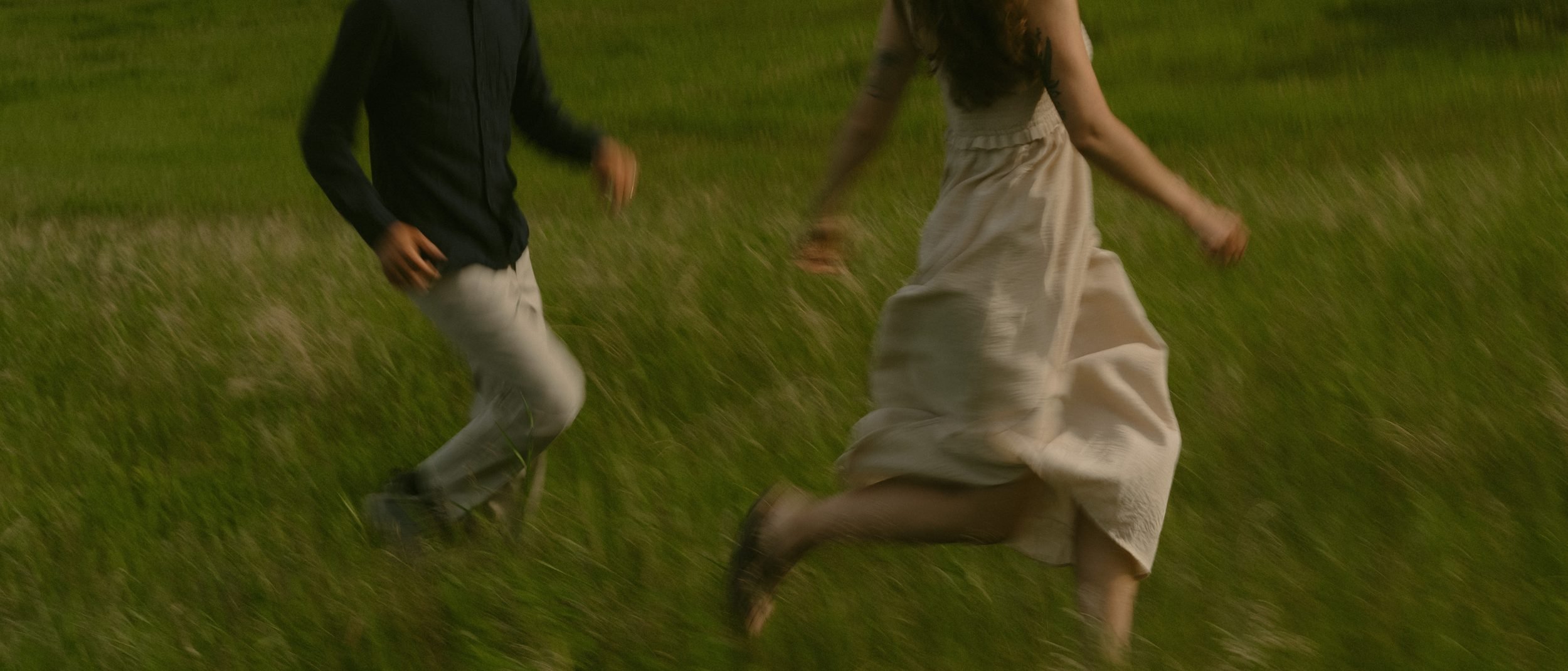
You can want mountain views and a slow morning. You can love being outside and still want your parents to reach the ceremony comfortably. An elopement in BC doesn't need a long trail, hiking boots or an early alarm to feel like your day.
Start by choosing how you want to spend the time: a private ceremony, a few people you love, photographs somewhere meaningful and a meal you're looking forward to. Then find a setting with suitable access, permission for the ceremony and a weather alternative you would be happy to use.
We're Cam and Abby, the two photographers behind Summit & Sage. Hiking elopements are one part of our work. We also photograph weddings and couples in settings where the experience is shaped around people, food, light and time together. This guide explains how to plan the non-hiking version, with room for a landscape you love.
Decide what you want the day to include
Before choosing a place, picture the hours on either side of the ceremony. Are you having breakfast together? Getting ready separately? Inviting a handful of people for dinner? Taking a ferry somewhere for a few days afterwards?
Choose a few things you would enjoy even without cameras. Those choices give the day structure and help us plan photographs around something real.
A non-hiking elopement might include:
Getting ready together in accommodation you've booked for the occasion.
A ceremony at a permitted garden, waterfront site or private property.
A short portrait walk with places to stop and sit.
Cake and a toast with your witnesses where food and drinks are allowed.
A restaurant reservation, private dinner or meal at your accommodation.
You don't need to add activities to make an elopement long enough. Equally, the ceremony doesn't have to be the only part worth photographing. The anticipation, congratulations, first meal and quiet time afterwards can all belong in the story.
Choose who joins you, and when
We often use elopement for a celebration with fewer than 20 guests, but that is our working shorthand. Your venue or package provider may define it differently. Tell every supplier the actual number of people, including anyone working on the day.
You could have witnesses only, invite immediate family to the ceremony, or spend part of the day privately and meet everyone for dinner. If you want a private vow exchange as well as a ceremony with guests, decide where each happens and whether both activities are permitted.
Think about the experience of anyone joining you. A grandparent might be comfortable at the ceremony and dinner but prefer to skip a portrait walk. Tell them the plan in advance and arrange a comfortable place to spend that interval. Don't build a schedule that leaves guests standing beside the car while you disappear for an hour.
If someone needs step-free access, nearby washrooms, seating or a shorter walking distance, treat those as selection criteria from the beginning. Ask about the actual route and surfaces rather than relying on the word accessible in a description.
Five ways to elope in BC without a long hike
These are planning formats, not claims that every site within them permits weddings or that we've photographed at every example. The best choice depends on the people attending, the season and what you want the day to feel like.
A ceremony and dinner close to the city
Vancouver and the surrounding Lower Mainland can suit couples who want a simple travel plan, accommodation nearby and a meal after the ceremony. You can choose a permitted outdoor setting or an indoor ceremony space, then make time for portraits without a long drive.
Keeping the ceremony and dinner close can matter more than finding an isolated location. Decide whether privacy, a particular view or spending less time in transit matters most. A public shoreline can have other visitors even when your ceremony itself is authorized.
A coastal celebration with accommodation nearby
A coastal stay can give you somewhere comfortable to get ready, return to between photographs and spend the night. On the Sunshine Coast or Vancouver Island, allow for the transport required to reach the accommodation and the ceremony.
If a ferry is part of the trip, check the current route, reservation and check-in requirements directly with BC Ferries. We would prefer a travel plan with enough margin that a transport delay doesn't immediately threaten the ceremony. Staying nearby the night before is one option to discuss, not a requirement for every location.
For portraits near the water, check access and conditions for the exact place and time. A beach that looks easy in a photograph may involve stairs, slippery rock or ground that changes with the tide.
A private garden, lodge or property
A private booking may offer a clearer plan for access, washrooms, getting ready and an indoor alternative. Ask which parts of the property are yours to use and whether the ceremony, photographs and meal are all included in the permission.
Accommodation permission and event permission are different questions. A holiday rental accepting an overnight booking doesn't establish that it allows a wedding, extra visitors, vendors or a catered meal. Get the owner's written approval for the actual plan before treating it as your venue.
A gondola-access mountain setting
A gondola can make a mountain setting possible without a long climb. It still needs a wedding plan. Sea to Sky Gondola, for example, offers designated elopement locations, and its special-occasion photography rules distinguish portrait sessions from ceremonies and vow exchanges, which require a wedding booking.
Ask the operator about walking surfaces, capacity, staff access, the last ride down and weather disruption. A lift to the summit doesn't guarantee a step-free route to every lookout or remove the need for a backup. This is a researched option, not a firsthand Summit & Sage wedding account.
A lakeside or forest-edge celebration
You may be drawn to trees, still water and a short approach rather than a mountain viewpoint. Start with the ceremony permission and access requirements for the specific location. A spot that works for a casual visit or portrait session may not work for a legal ceremony, chairs or a gathering.
Choose a plan with parking, washrooms and shelter appropriate to the people coming. Keep any walking distance honest. A short route on flat gravel and a short route down wet roots are different experiences in wedding clothes.
Check access from the car to the ceremony
No hiking should mean the route fits your needs, not merely that it falls below somebody else's idea of a hike. Ask the venue, land manager or operator specific questions:
How far is the walk from the actual parking or drop-off point?
Are there stairs, steep slopes, loose gravel or uneven ground?
Can everyone use the route in the weather expected for that season?
Are seats and washrooms available where they are needed?
What happens if the closest parking is full?
Can vendors carry what they need without blocking other visitors?
How would we leave promptly if conditions changed?
Check the route again when the plan is more settled. A scenic setting is useful only if the journey there and back works for the people involved. Avoid promising guests that a location is easy until you've answered those questions for them.
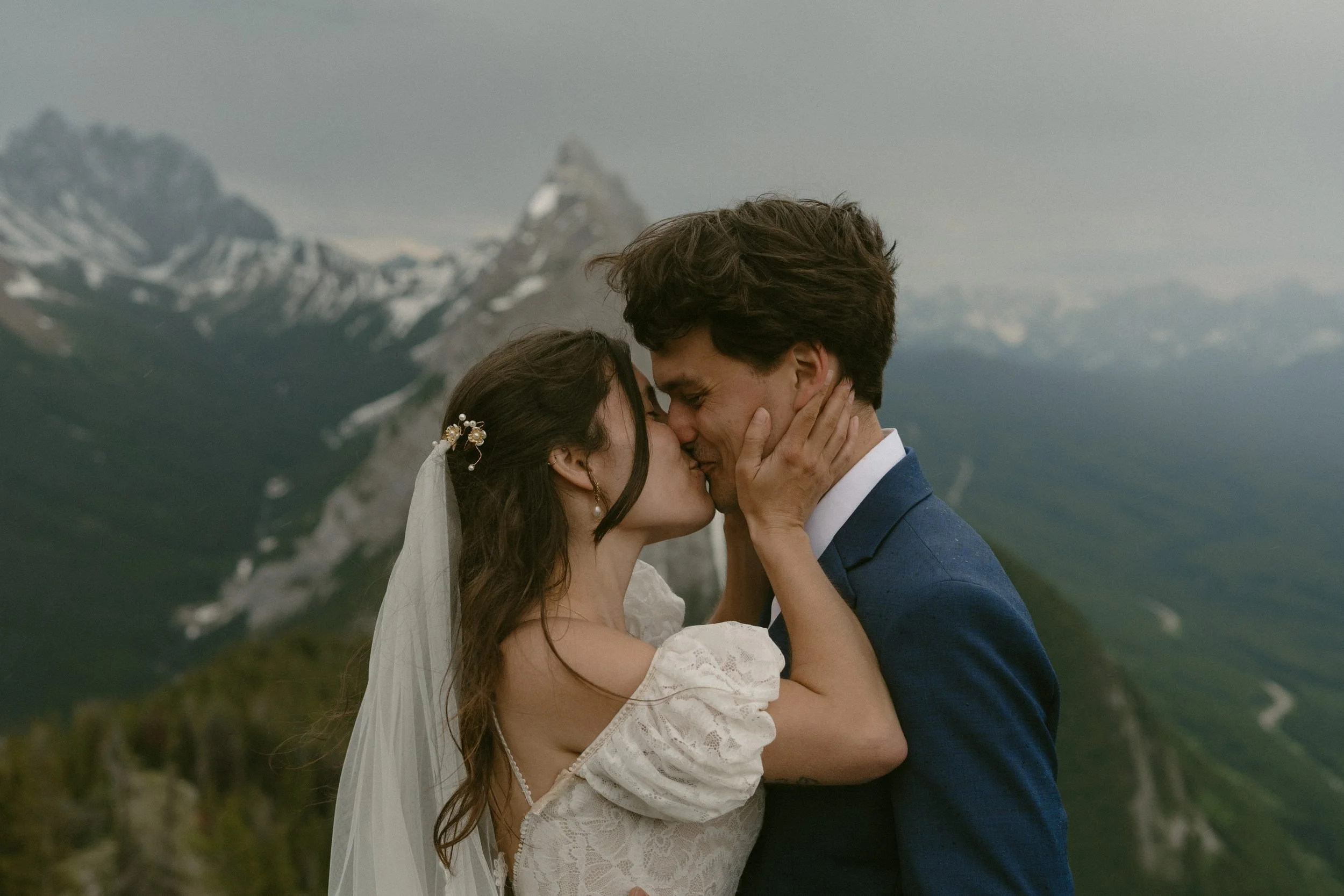
Arrange the legal ceremony and location permission separately
An elopement can be a legal wedding, or you can complete the legal marriage separately and plan a symbolic celebration. Tell your officiant and photographer which version you want so the timing and paperwork are clear.
Getting legally married in BC
BC's current process requires a $100 marriage licence purchased within three months before the ceremony. There is no waiting period after purchase. Arrange an authorized commissioner or religious official and two witnesses over 19. Check identification and personal eligibility requirements directly with BC Vital Statistics.
If you're eloping without guests, make a confirmed witness arrangement in advance. Don't assume that whoever happens to be nearby will be willing and eligible, or that witnesses are included in your photography booking.
Permission to use the place
A licence to marry doesn't grant access to a ceremony location. Private properties, municipal parks, provincial parks and commercial attractions each have their own process. Explain your group size, vendors, activities and any setup when asking for permission.
For example, Vancouver park ceremonies require approval even for a small group. Ordinary wedding photographs and photography with a setup are treated differently. Don't apply those municipal rules to a provincial park or private attraction.
For a provincial park, check the BC Parks permit information and confirm the ceremony and commercial photography requirements with the staff responsible for that park. A visitor pass or parking reservation does not establish permission for those activities. We confirm the photography permissions relevant to the proposed plan before treating access as settled.
Keep written approvals with your booking information. Avoid adding chairs, an arch, candles, confetti, food or music because another couple used them somewhere else. They change the activity you're asking the site to accommodate.
Choose a date for the experience you want
Start with the setting and your flexibility. Ask the operator or land manager about seasonal access, maintenance, booking windows and any restrictions that affect your plan.
A date with a quieter schedule may appeal if you're using a public setting. An indoor base may matter more if you want a late-afternoon ceremony during a season with less daylight. Summer brings its own considerations, including heat, busy visitor areas and possible smoke or closures. No season removes the need to check conditions.
Look at the available daylight for your date, not a timeline copied from another couple's wedding. We can help plan portrait time around the location's light and the parts of the experience that matter to you. A hill, forest or building can hide the sun before the published sunset time.
Build a weather alternative you would still enjoy
Choose an alternative before you need it. It might be a room at the property, a covered ceremony space or another approved plan agreed with the operator. A nearby viewpoint isn't a complete backup if it has the same exposure or permission problem.
Check Environment and Climate Change Canada's forecasts and alerts as the date approaches. Follow site closures and operator decisions. Outdoor portraits can remain flexible when the ceremony and the rest of the day already have somewhere suitable to happen.
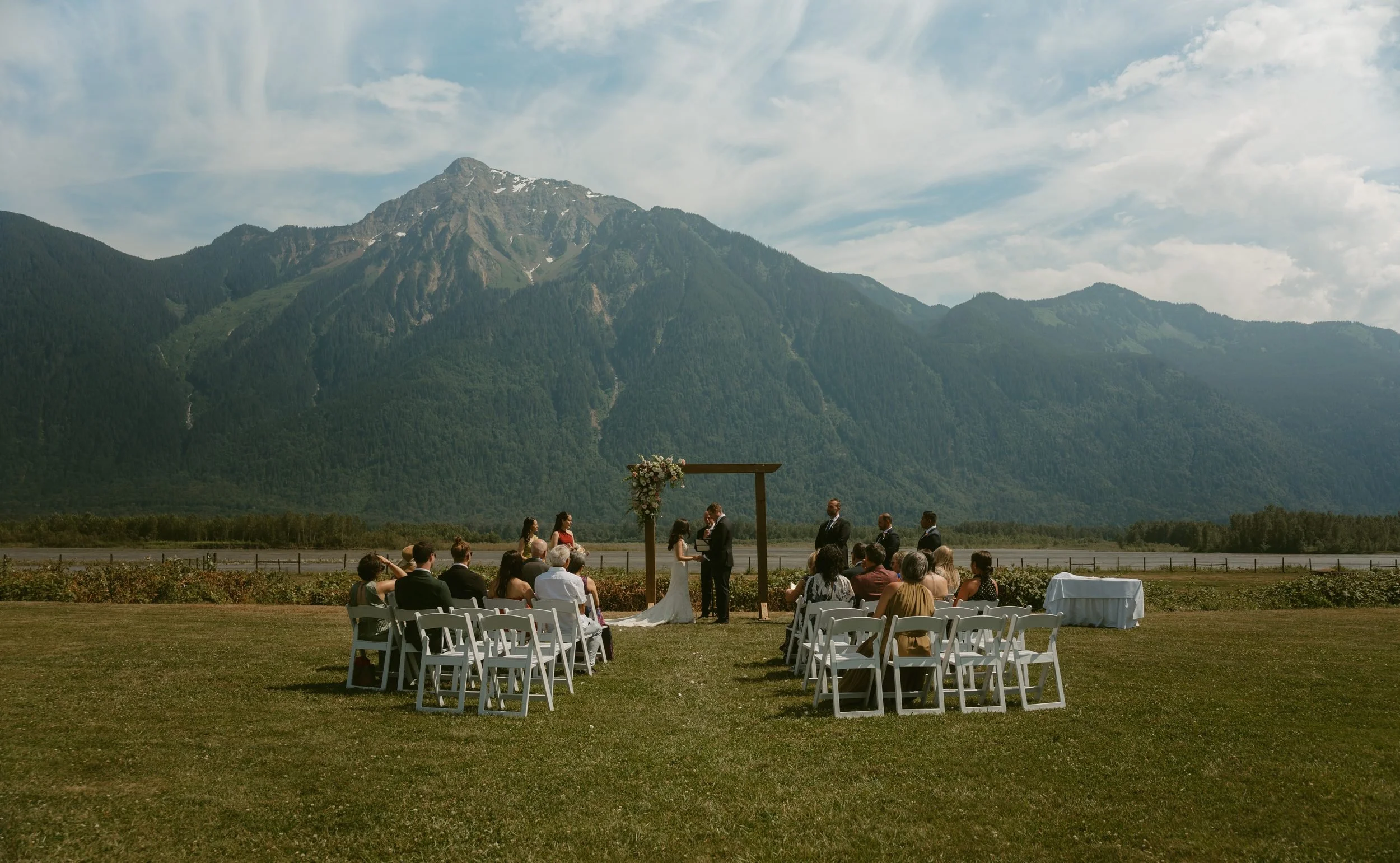
Two example non-hiking elopement timelines
These are illustrative schedules, not records of past clients' days. They assume short, confirmed transitions and suitable access. The season, legal ceremony, guests and venue booking would determine your actual times.
Four hours: ceremony, portraits and a meal with your people
2 p.m.: photography begins with the final preparations and a little time together.
2:45 p.m.: arrive at the ceremony location and settle in.
3 p.m.: ceremony and signing.
3:30 p.m.: congratulations and a few family or witness photographs.
4 p.m.: couple portraits nearby, with time to walk slowly and pause.
5 p.m.: join your guests for a toast and the beginning of dinner.
6 p.m.: photography finishes while the evening continues.
This works only if the travel and meal timing fit. A ferry crossing or an extended drive would need a different schedule. If the restaurant begins service later, decide whether a longer booking or a different photography window makes sense.
Six hours: more of the day, with fewer rushed transitions
Noon: photography begins during getting ready, with space for details and the people present.
1 p.m.: first look or time together before the ceremony.
2 p.m.: ceremony and signing.
2:30 p.m.: congratulations and photographs with the people who joined you.
3 p.m.: a nearby portrait location, including the travel and a break.
4:30 p.m.: return to your accommodation or dinner setting.
5 p.m.: an early meal, cake or a toast, according to the booking.
6 p.m.: photography finishes.
There is no need to fill every minute with an activity. A quiet half hour together may be part of what you wanted from an elopement. Plan enough coverage for the actual experience, then let some of it unfold.
What to budget for
Build your budget from real quotes for the day you've chosen. Include the ceremony and officiant, location or venue, photography, accommodation, travel, food, clothing, flowers and any help you want with planning. Ask which taxes and service charges are additional.
Our current standard elopement photography is $1,500 for two hours, $2,500 for four hours and $3,500 for six hours, in CAD before GST. Hiking, remote or otherwise complex adventures are quoted individually. A non-hiking day can still involve substantial travel or logistics, so share the full plan when asking for a quote.
Our current photography collections explain the starting options. We help with location, light, ceremony timing and photography logistics. We don't present those services as a complete wedding-planning package or an inclusion of venue, transport and officiant fees.
Pack for the actual route and the time outside
Comfortable walking shoes are useful even when formal shoes are part of the outfit. Bring layers suited to the forecast, drinking water, something to eat and any personal items you need to stay comfortable. Keep the marriage paperwork and rings with someone responsible for them.
Think about where bags, coats and umbrellas go during the ceremony. If you change shoes, decide who carries them. If dinner is later, make a food plan for the gap. These small decisions help the day feel easy without asking you to pretend that being hungry, cold or sore doesn't matter.
Keep the setup simple enough to carry out what you bring in. Stay within the approved area, leave paths available to other visitors and follow the site's conditions. The landscape doesn't need decoration that will be difficult to remove.
Questions about eloping in BC without hiking
Can we have a mountain elopement without climbing a mountain?
Yes, some operators provide lift-access settings and wedding bookings. Confirm the exact ceremony location, the walk after arrival and the weather alternative. Admission to an attraction isn't automatically a ceremony booking.
Can we invite our parents?
Yes. Choose a setting that suits their access and comfort needs, and tell the venue your complete group size. You can also share the ceremony and dinner while keeping some portrait time private.
Is a non-hiking elopement still an elopement?
Absolutely. The amount of walking doesn't determine how personal the day is. Use the format that lets you spend the day the way you want, and be specific with vendors about guest numbers and activities.
Do we need to be experienced at posing?
No. We help with light, movement and simple direction when it is useful. There will also be time when you're getting married, talking, laughing or taking things in, and our job is to notice what is happening.
Can we use a holiday rental for the ceremony?
Only if the property owner and any applicable rules allow the actual event. Get written confirmation covering visitors, vendors, the ceremony and any meal or setup. An accommodation booking alone isn't enough.
Are two hours of photographs enough?
Two hours can suit a simple ceremony and nearby portraits with little travel. Getting ready, time with family, several locations or a meal can call for more. Start with what you want remembered and work out the coverage from there.
Can our photographers choose and book everything for us?
We help shape the photography plan, including location ideas, light and timing. Ask about the division of responsibilities before booking. If you want someone to manage the whole event and its suppliers, a planner or an explicitly inclusive service may fit that need.
What if we're still deciding between an elopement and a small wedding?
Describe the people you want present and the experience you want to share. That conversation is more useful than settling on a label first. We can talk through what the photography would involve for either version.
Tell us how you want to spend the day
You don't need a trail picked out or a complete itinerary to inquire. Tell us the part of BC you're considering, your date or season, who might join you and what you're most looking forward to.
You can explore our photography portfolio, review our elopement collections, or start a conversation with us. We'll help you think through the photographs and the experience around them.